
When Downtime Costs More Than the Seal
On large pumps, the cost of downtime often far exceeds the cost of the mechanical seal itself. Removing couplings, dismantling bearings, or pulling the entire rotating assembly just to replace a conventional seal can take many hours — or even days.
A maintenance manager at a power plant once shared: “Changing a conventional seal on our large cooling water pumps used to take a full shift and sometimes longer. After we switched to split mechanical seals, the same job could be completed in a fraction of the time without major dismantling.”
This is exactly why split mechanical seals have become an important solution for plants that operate large equipment. At Orbit Fluid Solution LLP, we help customers evaluate when split seals make sense and how to apply them effectively. In this guide, we explain the advantages of split mechanical seals and their best use cases.
What Are Split Mechanical Seals?
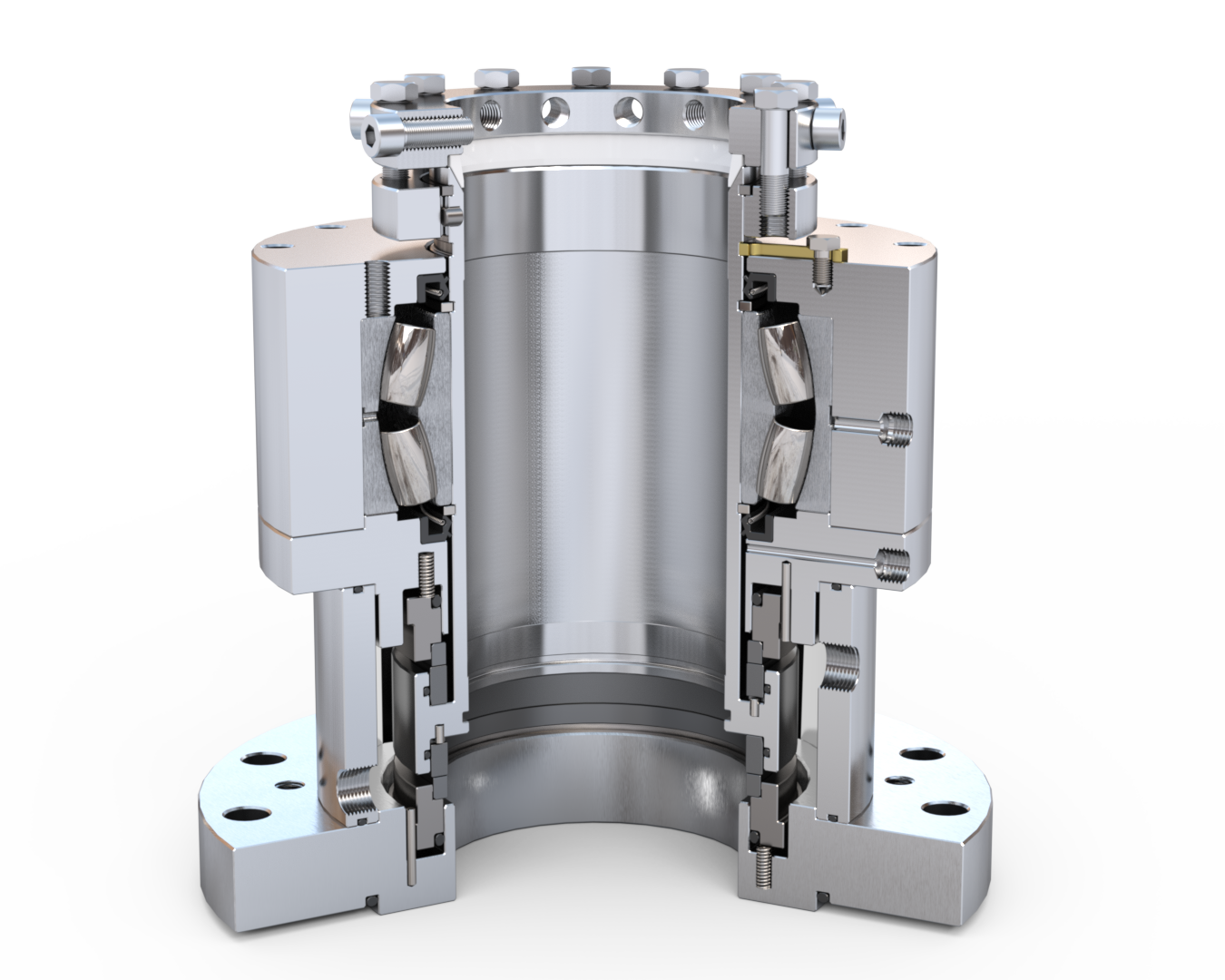
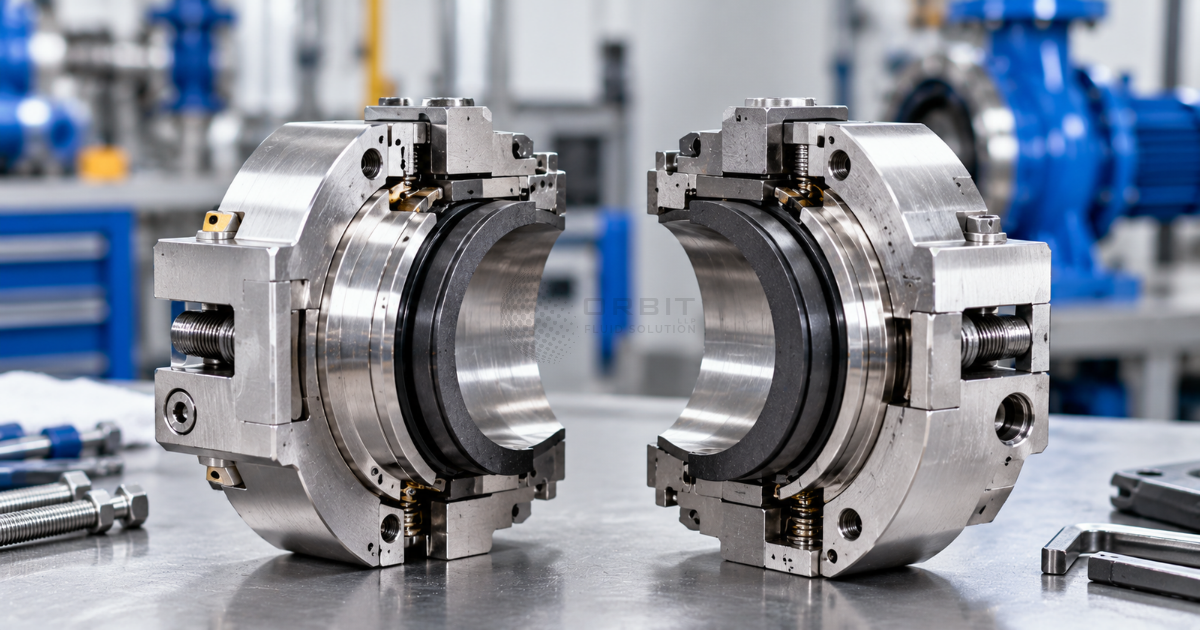
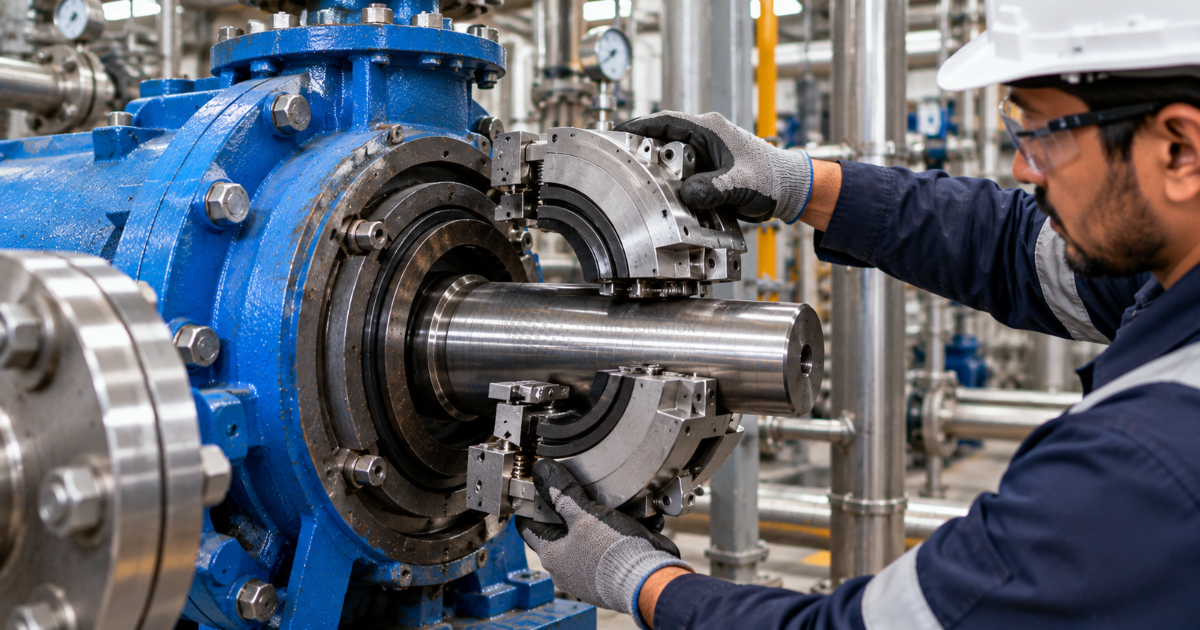
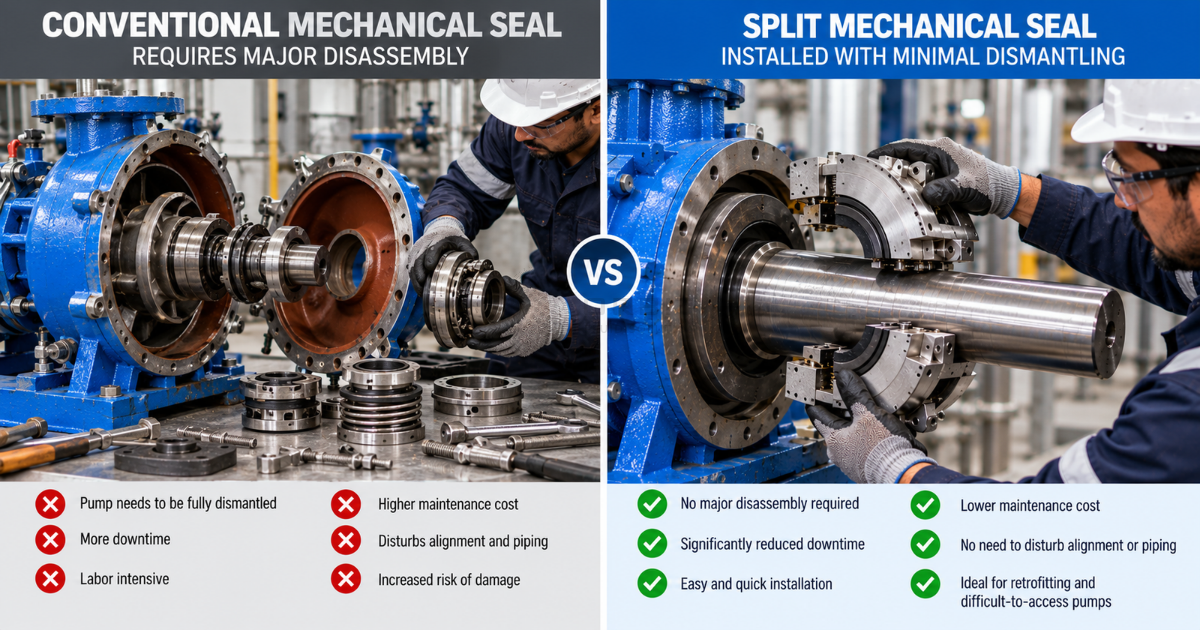
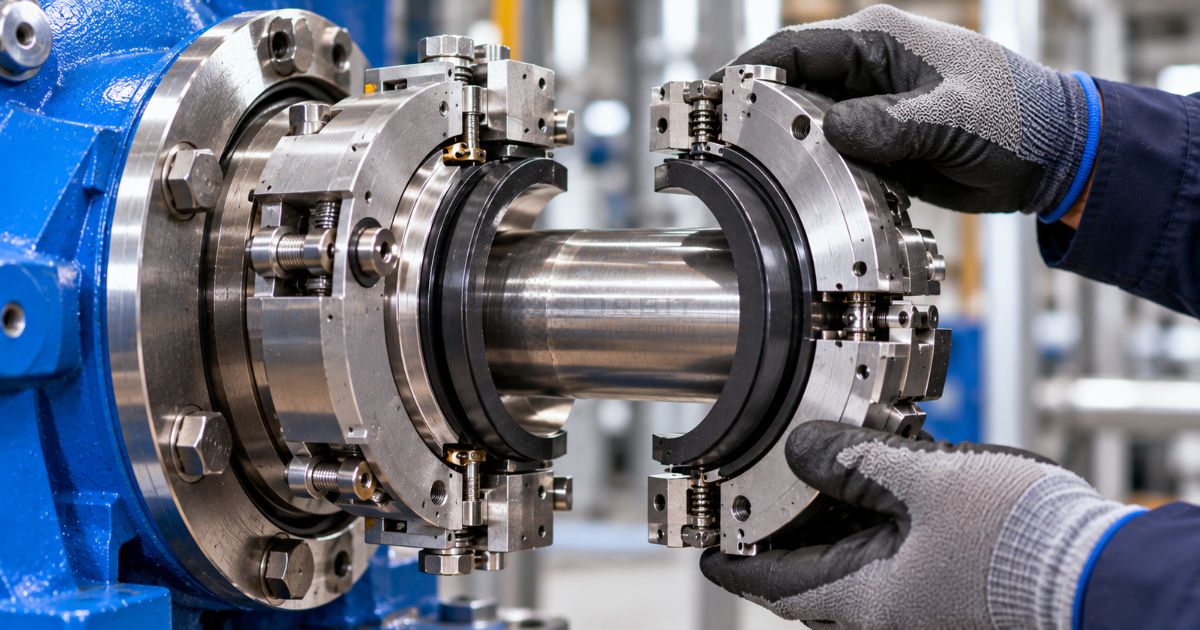
A split mechanical seal is designed so that the seal can be installed or removed without completely disassembling the pump or equipment. The seal is manufactured in two halves that fit around the shaft.
Unlike conventional (solid) seals that require the shaft to be free at one end, split seals can be fitted directly onto the shaft while the equipment remains largely in place.
Key design features typically include:
- Split seal faces
- Split gland or housing
- Split elastomers or specially designed secondary seals
- Hardware that clamps the two halves securely together
How Split Seals Differ from Conventional Seals
| Aspect | Conventional (Solid) Seal | Split Mechanical Seal |
|---|---|---|
| Installation | Requires shaft end access | Can be fitted around the shaft |
| Equipment dismantling | Often significant | Minimal or none |
| Downtime | Higher | Significantly lower |
| Skill level required | Moderate to high | Requires careful assembly of halves |
| Typical applications | Standard pumps | Large pumps, vertical pumps, hard-to-access equipment |
| Initial cost | Generally lower | Higher |
| Best value | Regular-sized equipment | Large equipment where downtime is costly |
Major Advantages of Split Mechanical Seals
1. Dramatically Reduced Downtime
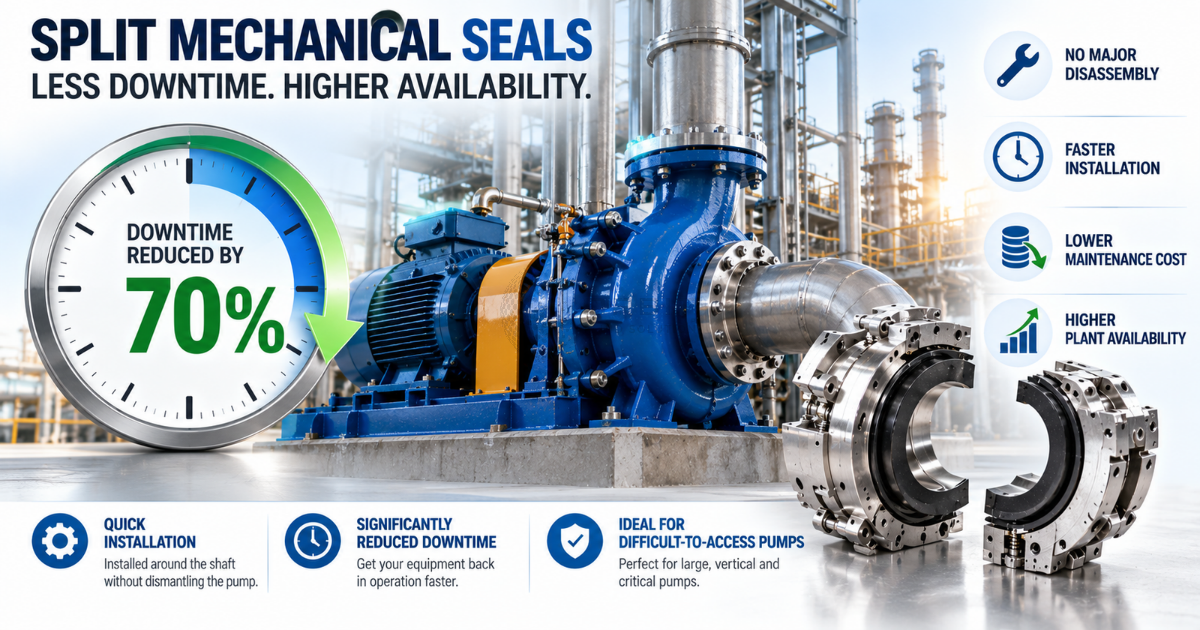
This is the biggest advantage. On large pumps, the time saved by avoiding major disassembly often justifies the higher cost of the seal many times over.
2. No Need to Disturb Couplings, Bearings, or Motors
In many cases, the pump can remain connected to the driver and piping, reducing the risk of alignment problems after the job.
3. Ideal for Vertical and Difficult-to-Access Pumps
Vertical pumps, large cooling water pumps, and equipment in tight spaces benefit greatly from split designs.
4. Lower Overall Maintenance Cost on Large Equipment
Although the seal itself costs more, the total cost of the maintenance event (labor + downtime + realignment) is usually much lower.
5. Faster Return to Service
Plants can plan shorter outages and return critical equipment to operation more quickly.
Best Use Cases for Split Mechanical Seals
Split seals deliver the highest value in the following situations:
1. Large Horizontal Pumps
Where removing the coupling and bearings would be time-consuming and costly.2. Vertical Pumps
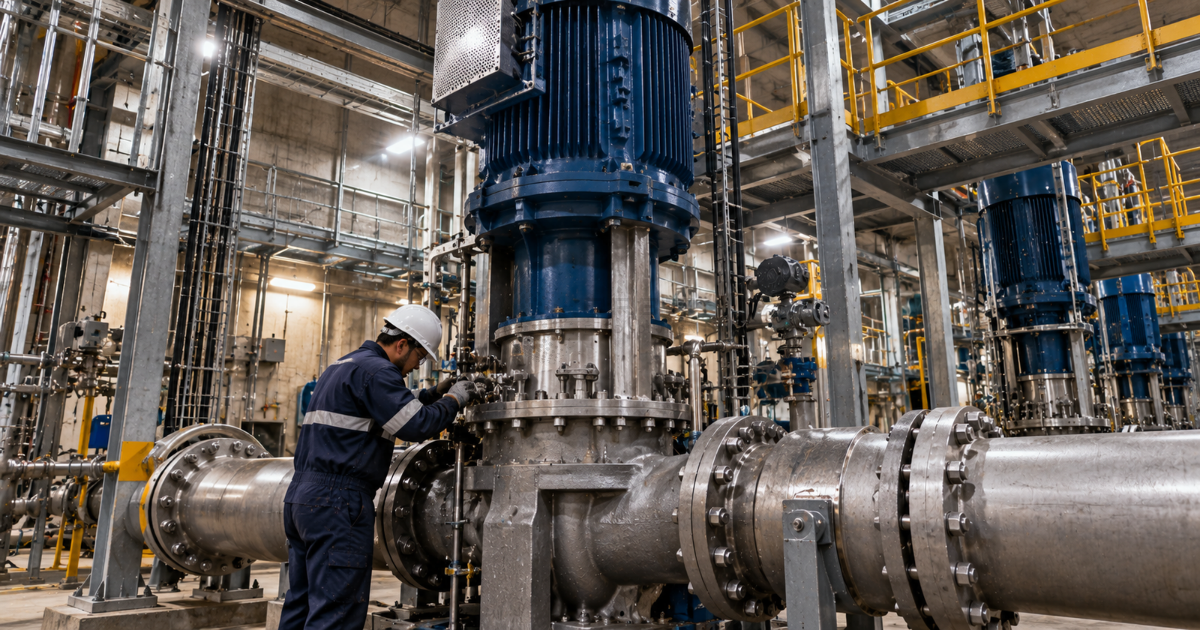
Especially large vertical turbine or mixed-flow pumps where accessing the seal from above is difficult.3. Cooling Water and Circulating Water Pumps
Common in power plants and large industrial facilities. These pumps are often large and critical.4. Equipment with Limited Access
Pumps located in confined spaces, under structures, or in areas where heavy lifting is difficult.5. Plants with High Downtime Costs
Any facility where every hour of lost production is expensive (power generation, continuous process plants, large water utilities).6. Older Equipment
Where original design makes conventional seal replacement particularly difficult.
Limitations and When Split Seals May Not Be Ideal
Split mechanical seals are not the best choice for every application:
- Higher initial purchase cost
- Require careful assembly of the two halves to maintain face flatness and sealing integrity
- May not be suitable for very high-pressure or extremely demanding services in some designs
- Not always necessary on smaller pumps where conventional seals can be changed quickly
For standard-sized pumps with easy access, a high-quality cartridge seal is often still the preferred solution.
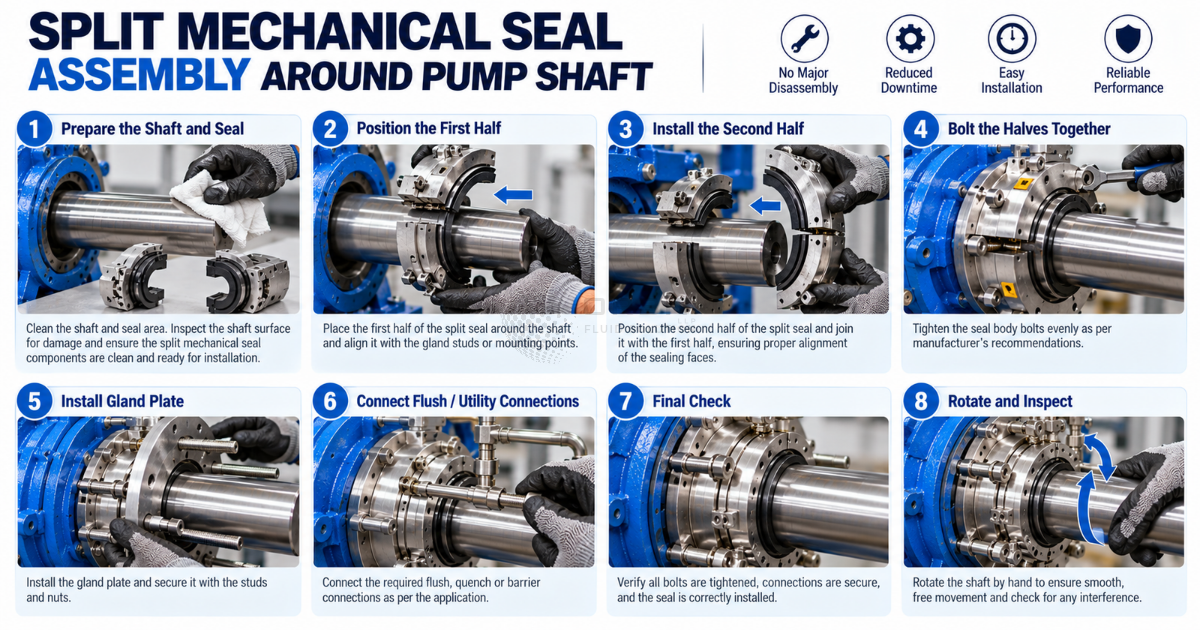
Installation Overview of Split Seals
While installation is simpler in terms of equipment dismantling, it still requires care:
- Thoroughly clean the shaft and seal area
- Carefully assemble the two halves of the seal around the shaft
- Ensure the split faces are properly aligned and protected
- Secure the clamping hardware evenly
- Install the gland and tighten correctly
- Follow the manufacturer’s specific procedures for setting and final checks
Proper training and attention to detail remain essential.
Reducing Outage Time on Large Cooling Water Pumps
A power plant was spending excessive time and resources replacing conventional seals on its large cooling water pumps. Each seal change required significant dismantling and realignment work.
Solution provided by Orbit Fluid Solution LLP:
- Evaluated the application and recommended suitable split mechanical seals
- Supported the first installation with technical guidance
- Helped the maintenance team understand the correct assembly process
Results:
- Seal change time reduced dramatically
- No need for major equipment disassembly
- Faster return to service
- Lower total maintenance cost per intervention
The higher seal cost was easily offset by the savings in downtime and labor.
Best Practices When Using Split Mechanical Seals
- Confirm that the application is a good candidate (large equipment + high downtime cost)
- Choose a reputable split seal design with proven performance
- Ensure the maintenance team is trained on the specific split seal model
- Protect the split faces carefully during assembly
- Follow torque and assembly sequences precisely
- Keep good records of installation and performance
- Consider split seals as part of a broader reliability strategy, not just a quick fix
How Orbit Fluid Solution LLP Supports Split Seal Applications
At Orbit Fluid Solution LLP, we help plants evaluate and implement split mechanical seals where they deliver real value. Our support includes:
- Application assessment to confirm suitability
- Supply of quality split seal designs
- Technical guidance during installation
- Training support for maintenance teams
- Advice on when conventional cartridge seals are still the better option
We focus on matching the right sealing solution to the real needs of the plant.
Split Seals Shine Where Downtime Is Expensive
Split mechanical seals offer a powerful advantage for plants operating large pumps and hard-to-access equipment. Their ability to be installed and removed with minimal dismantling can significantly reduce downtime, labor costs, and the risk of alignment issues.
They are not the universal solution for every pump, but in the right applications — especially large cooling water pumps, vertical pumps, and critical equipment with high downtime costs — they deliver outstanding value.
At Orbit Fluid Solution LLP, we help customers identify when split seals are the smartest choice and support successful implementation.
Operating large pumps where seal changes cause expensive downtime? Contact our technical team today to explore whether split mechanical seals are the right solution for your plant.
Also Read:
-
 Top 10 Causes of Mechanical Seal Leaks and How to Fix Them16 Apr 2025 Seal Failure and Prevention
-
 How to Prevent Seal Failures in Oil and Gas Applications: A Comprehensive Guide16 Apr 2025 Industry-Specific Seal Solutions
-
 The Ultimate Guide to Choosing Mechanical Seals for the Food Processing Industry05 Apr 2025 Industry-Specific Seal Solutions
-
 How to Install Mechanical Seals Correctly (Step-by-Step Guide)13 Oct 2026 Industry-Specific Seal Solutions
-
 Why Double Mechanical Seals Are Essential for High-Risk Applications12 Oct 2026 Industry-Specific Seal Solutions

