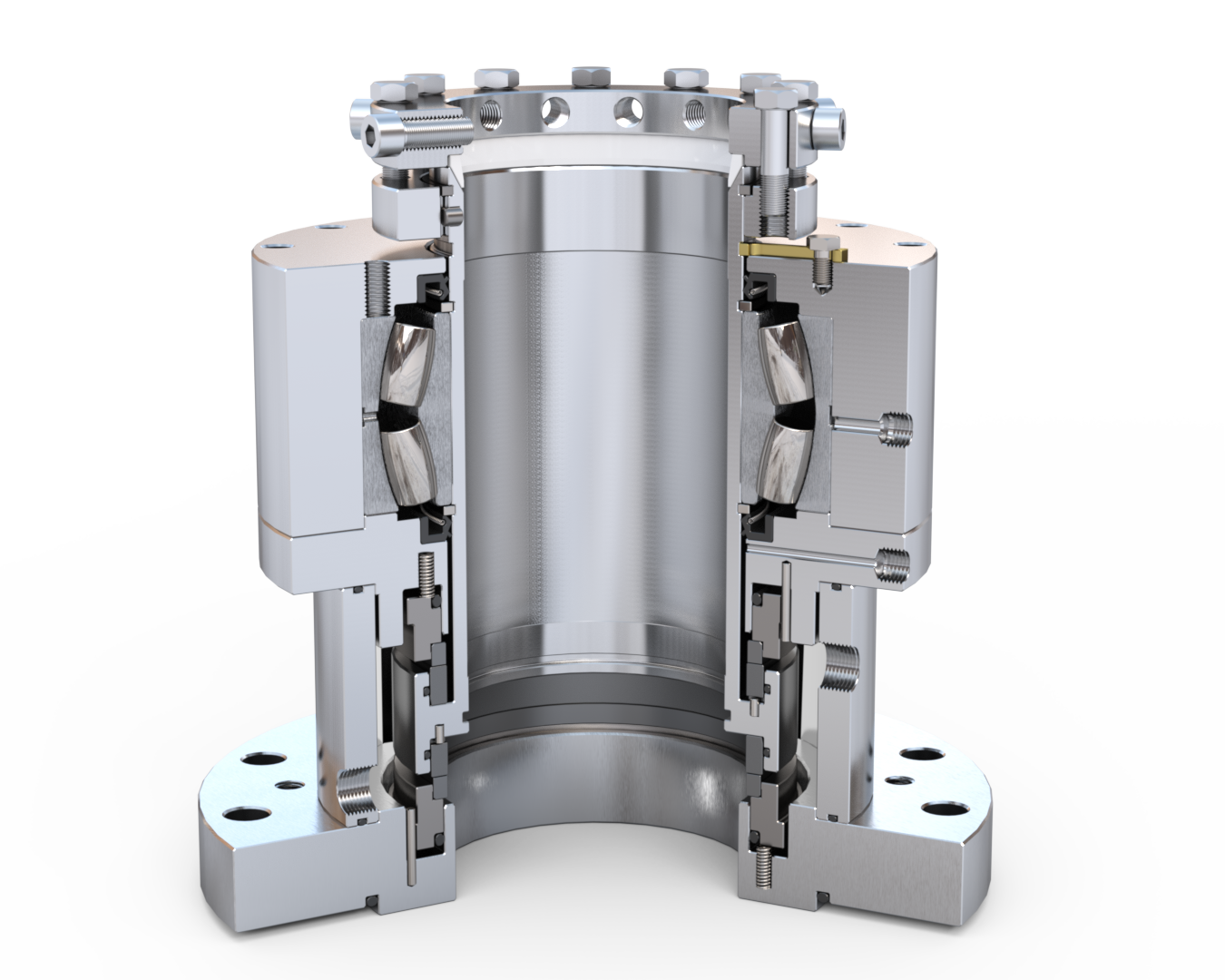

The Heart of Every Mechanical Seal
The performance and life of a mechanical seal depend heavily on one critical interface — the seal faces. These two flat, precision-lapped surfaces slide against each other under pressure while maintaining a microscopic lubricating film.
Choosing the wrong face material is one of the most common reasons for premature seal failure. A material that works excellently in clean water can fail quickly in abrasive slurry or aggressive chemicals.
A reliability engineer once shared: “We kept changing seals every few months until we realized the face materials were not suited for our abrasive application. After switching to the right combination, seal life improved dramatically.”
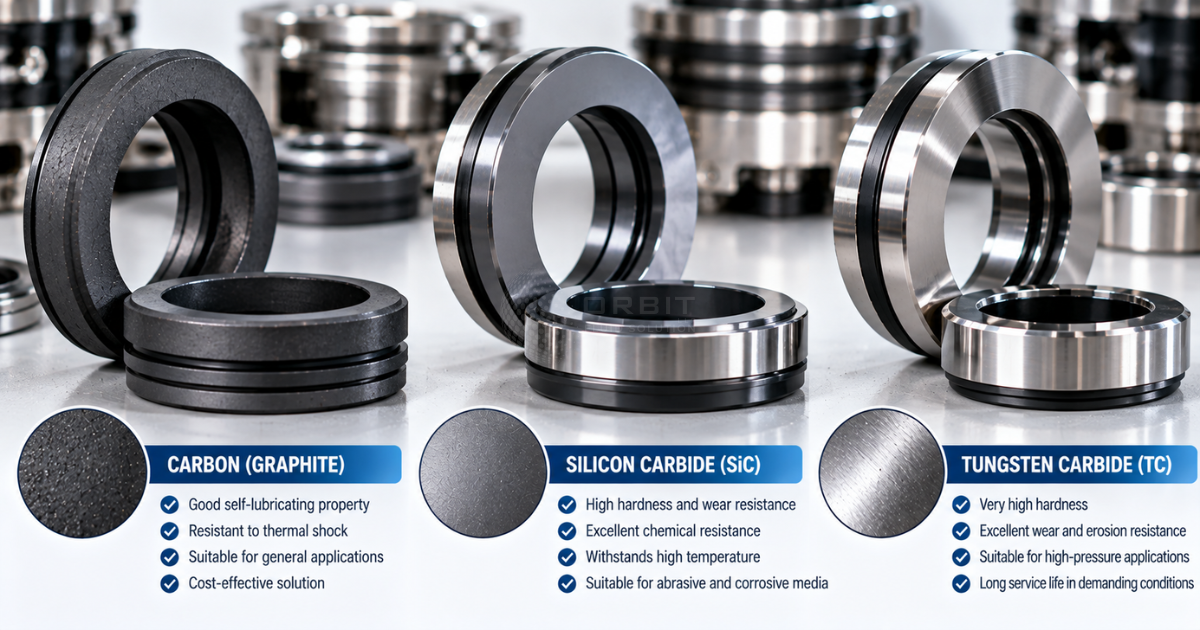
At Orbit Fluid Solution LLP, we help customers understand seal face materials so they can make informed decisions. In this guide, we explain the three most important face materials — Carbon, Silicon Carbide, and Tungsten Carbide — and how to select the right one for your application.
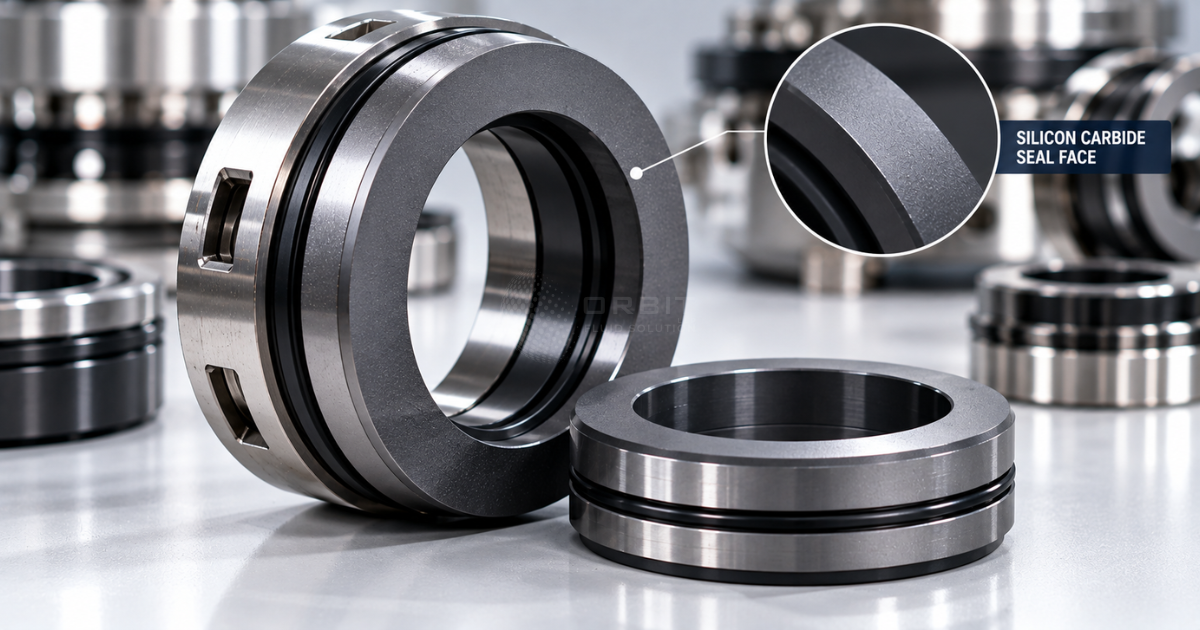
Why Seal Face Materials Matter
Seal faces must balance several demanding requirements:
- Excellent wear resistance
- Good thermal conductivity (to remove heat)
- Chemical compatibility with the process fluid
- Ability to maintain flatness under pressure and temperature
- Resistance to dry running (to varying degrees)
- Cost-effectiveness
No single material is perfect for every application. The right choice depends on the operating conditions.
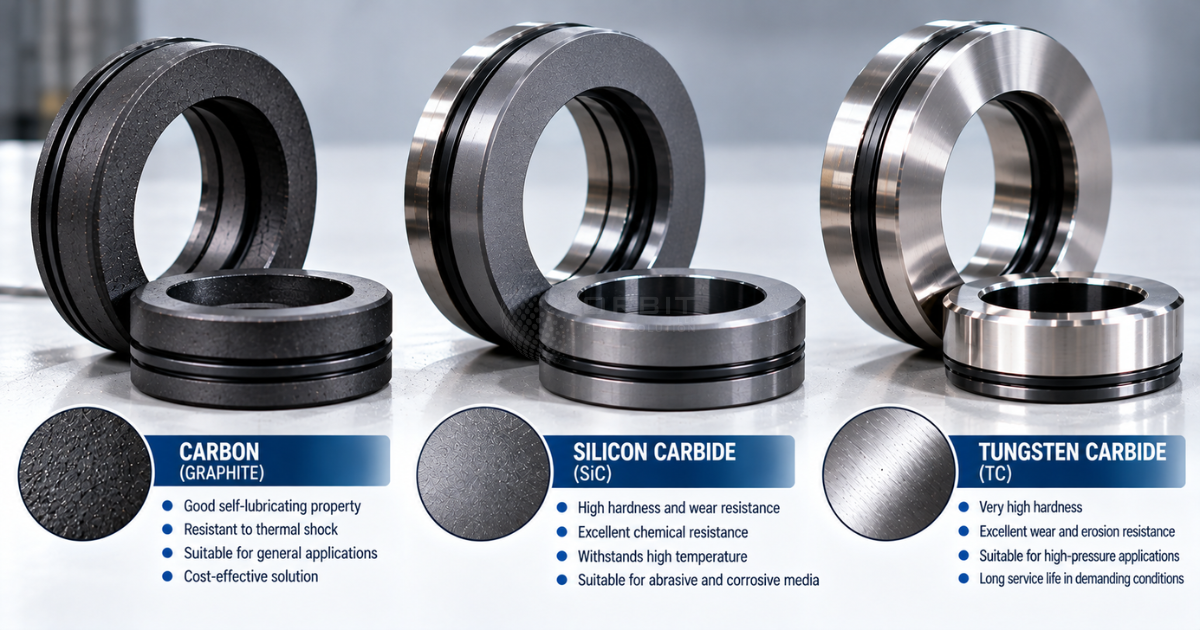
Carbon Seal Faces
Carbon is one of the oldest and still most widely used seal face materials.
Key Characteristics:
- Self-lubricating properties
- Excellent ability to run against harder materials
- Good performance in clean, lubricating fluids
- Relatively low cost
- Lower hardness compared to carbides
Advantages:
- Forgiving during short dry-running periods
- Good in clean water, oils, and many light chemicals
- Lower cost than premium carbide faces
Limitations:
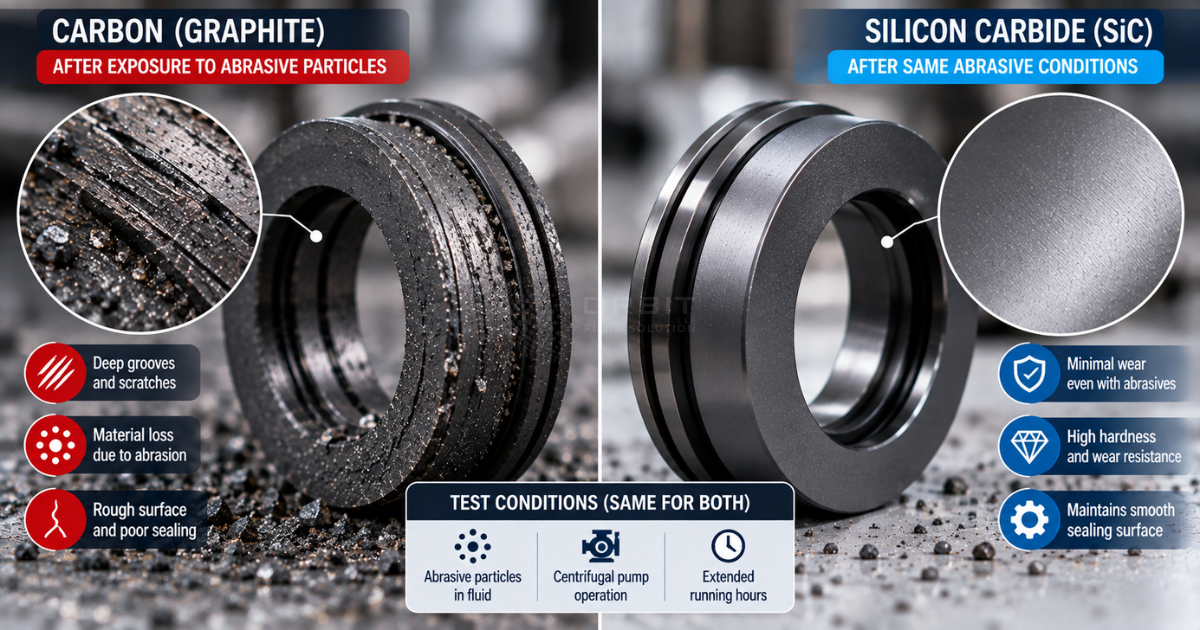
- Poor resistance to strong abrasives
- Can oxidize or degrade at very high temperatures
- Not ideal for heavy slurry or highly abrasive services
Best used in:
Clean water, light oils, many food and beverage applications, and as a softer face running against a hard face (e.g., Carbon vs Silicon Carbide).
Silicon Carbide Seal Faces
Silicon Carbide (SiC) is one of the most popular premium seal face materials in modern industry.
Key Characteristics:
- Extremely hard and wear-resistant
- Excellent thermal conductivity
- Outstanding chemical resistance
- Maintains flatness well under load and temperature
Advantages:
- Excellent performance in abrasive services
- Superior heat dissipation (reduces risk of thermal cracking)
- Wide chemical compatibility
- Available in different grades (reaction-bonded, sintered, etc.)
Limitations:
- More brittle than tungsten carbide (can chip under extreme impact or thermal shock if not selected properly)
- Higher cost than carbon
Best used in:
Abrasive applications, chemical processing, high-temperature services, and as hard face vs hard face (SiC vs SiC) for demanding duties.
Tungsten Carbide Seal Faces
Tungsten Carbide (WC) is known for its exceptional toughness and strength.
Key Characteristics:
- Very high hardness and toughness
- Excellent resistance to mechanical damage
- Good wear resistance
- Higher density and strength than silicon carbide
Advantages:
- Highly resistant to chipping and impact
- Excellent for high-pressure applications
- Good performance in slurry and abrasive services
- Strong under mechanical stress
Limitations:
- Lower thermal conductivity than silicon carbide (can run hotter)
- Can be attacked by certain strong chemicals (depending on binder used)
- Generally more expensive
Best used in:
High-pressure applications, heavy slurry services, and situations where mechanical toughness is critical.
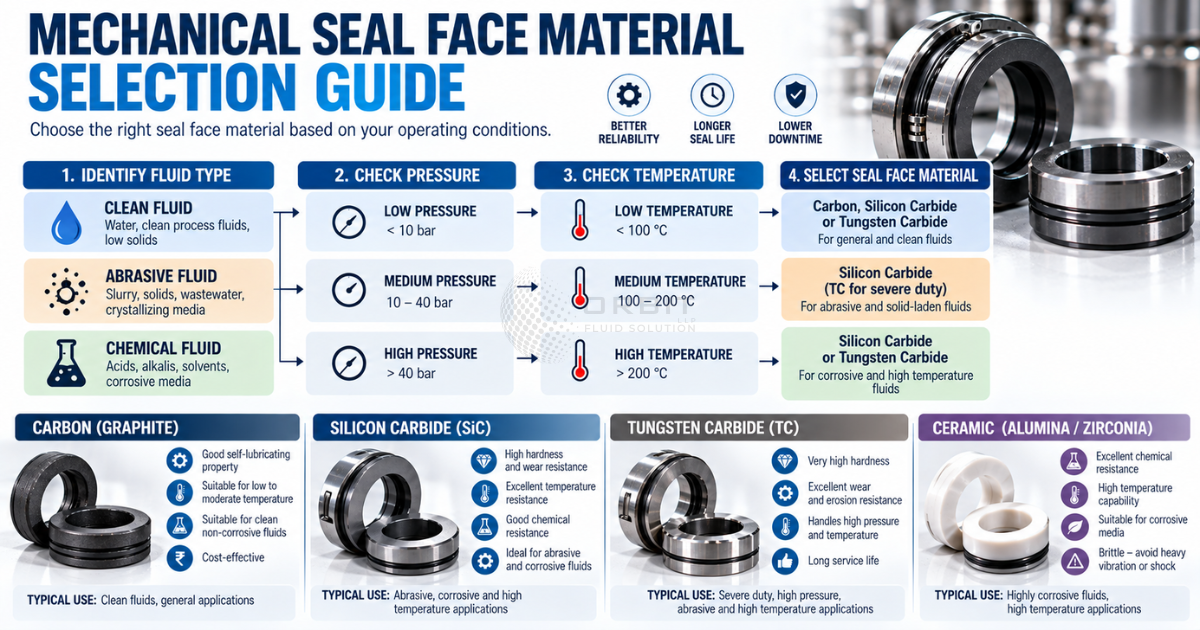
Comparison: Carbon vs Silicon Carbide vs Tungsten Carbide
| Property | Carbon | Silicon Carbide (SiC) | Tungsten Carbide (WC) |
|---|---|---|---|
| Hardness | Low | Very High | Very High |
| Wear Resistance | Moderate | Excellent | Excellent |
| Thermal Conductivity | Moderate | Excellent | Good |
| Toughness / Impact Resistance | Good | Moderate (can be brittle) | Excellent |
| Chemical Resistance | Good (limited in some chemicals) | Excellent | Good to Very Good |
| Dry Running Capability | Better | Moderate | Moderate |
| Cost | Low | Medium to High | High |
| Typical Use | Clean fluids | Abrasive & chemical | High pressure & slurry |
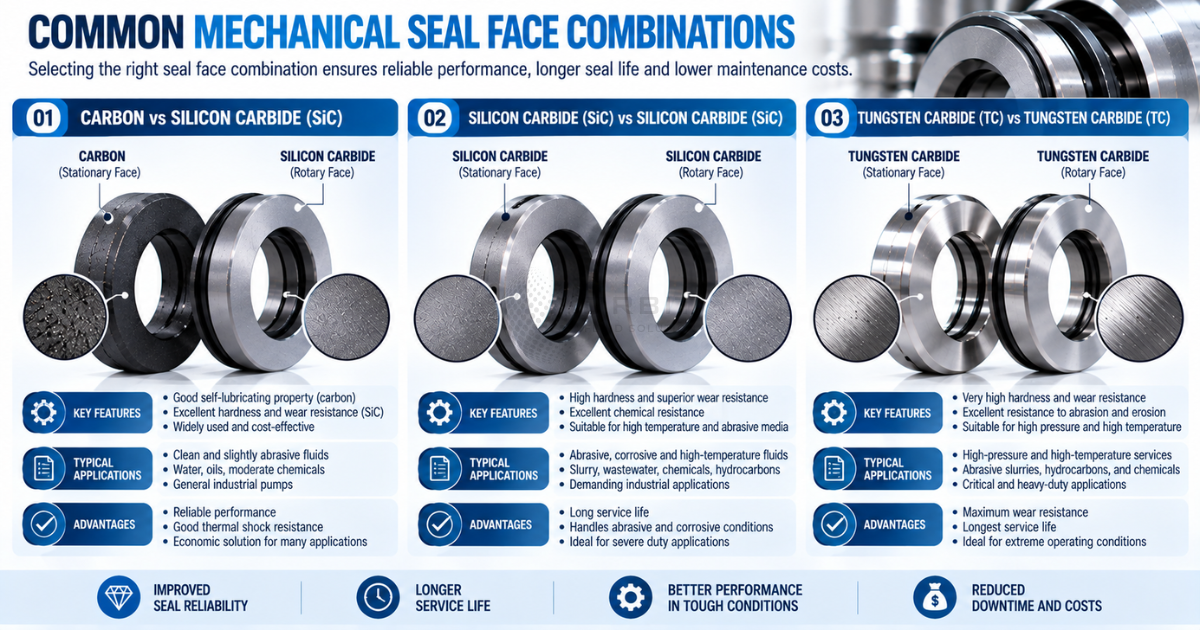
Common and Recommended Face Combinations
- Carbon vs Silicon Carbide → Most common combination for general-purpose and clean-to-moderately demanding applications
- Silicon Carbide vs Silicon Carbide → Excellent for abrasive, chemical, and high-duty services
- Tungsten Carbide vs Tungsten Carbide → Preferred for high-pressure and tough mechanical conditions
- Carbon vs Tungsten Carbide → Used in specific applications where toughness and self-lubrication are needed
The combination is often more important than the individual material.
How to Select the Right Seal Face Material
- Is the fluid clean or abrasive?
- Clean → Carbon vs SiC is often sufficient
- Abrasive → SiC vs SiC or WC-based combinations
- What is the pressure level?
- High pressure → Prefer balanced seals with hard faces (SiC or WC)
- What is the chemical environment?
- Aggressive chemicals → Silicon Carbide is usually preferred
- Is there risk of dry running?
- Higher risk → Carbon as one face can offer more forgiveness
- What is the temperature range?
- High temperature → Materials with good thermal conductivity (especially SiC) help
- Is the fluid clean or abrasive?
Solving Abrasion-Related Failures with Better Face Materials
A wastewater treatment plant was experiencing seal life of only 3–4 months on sludge pumps. The original seals used a standard carbon vs ceramic combination.
Solution by Orbit Fluid Solution LLP:
- Changed to Silicon Carbide vs Silicon Carbide faces
- Applied an effective clean water flush
- Upgraded to a robust cartridge design
Results:
- Seal life increased to more than 16 months
- Significant reduction in maintenance frequency and cost
- Improved pump reliability
This case shows how the right face material selection can transform performance in abrasive services.
Best Practices for Seal Face Material Selection
- Never select face materials based only on cost
- Always consider the most severe condition the seal will face
- Match the face combination to both the process fluid and the flush fluid
- Consult material compatibility data and experienced seal suppliers
- Document what works (and what fails) in your specific applications
- For critical equipment, invest in premium face materials — the ROI is usually clear
How Orbit Fluid Solution LLP Helps with Face Material Selection
At Orbit Fluid Solution LLP, we help customers choose the optimal seal face materials by:
- Analyzing the actual operating conditions
- Recommending proven face combinations (Carbon, SiC, WC)
- Supplying high-quality faces in cartridge and component seals
- Providing application engineering support
- Helping troubleshoot material-related failures
Our goal is to match the face materials to your real-world conditions for maximum reliability.
Right Faces Deliver Right Performance
Understanding seal face materials — Carbon, Silicon Carbide, and Tungsten Carbide — is essential for anyone responsible for mechanical seal performance.
- Carbon offers self-lubrication and cost-effectiveness for cleaner services.
- Silicon Carbide provides excellent wear resistance, thermal conductivity, and chemical durability.
- Tungsten Carbide delivers outstanding toughness for high-pressure and severe mechanical conditions.
The best results come from selecting the right material combination for your specific application, rather than using a one-size-fits-all approach.
At Orbit Fluid Solution LLP, we help industries make these material decisions with confidence.
Need help selecting the right seal face materials for your application? Contact our technical team today for expert guidance.
Also Read:
-
 Top 10 Causes of Mechanical Seal Leaks and How to Fix Them16 Apr 2025 Seal Failure and Prevention
 -
 The Ultimate Guide to Choosing Mechanical Seals for the Food Processing Industry05 Apr 2025 Industry-Specific Seal Solutions
 -
 How to Prevent Seal Failures in Oil and Gas Applications: A Comprehensive Guide16 Apr 2025 Industry-Specific Seal Solutions
 -
 Top 8 Reasons Why Mechanical Seals Fail Prematurely28 Sep 2026 Industry-Specific Seal Solutions
 -
 How to Extend the Life of Your Mechanical Seals with Proper Maintenance18 Aug 2026 Industry-Specific Seal Solutions

