
How Temperature Affects Mechanical Seal Performance
Temperature — A Silent Killer of Mechanical Seals
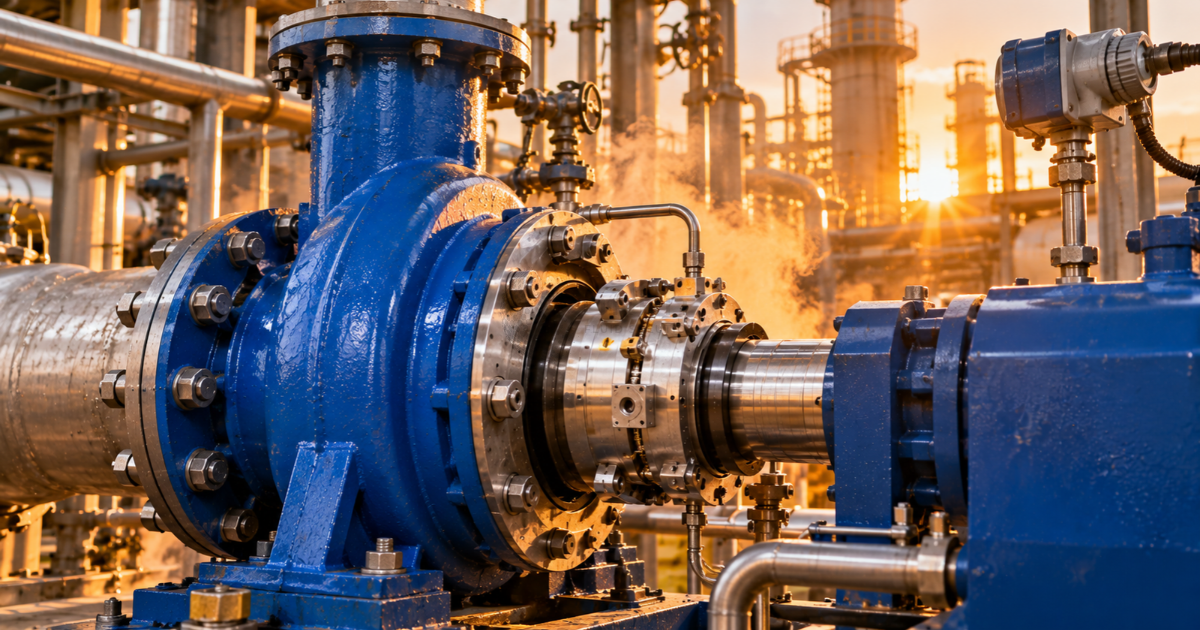
Temperature is one of the most critical factors influencing mechanical seal performance. Both high and low temperatures, as well as rapid temperature changes, can dramatically shorten seal life if not properly managed.
A reliability engineer once shared: “We kept losing seals on a hot process pump. Everything looked fine on paper until we measured the actual seal chamber temperature. It was far higher than expected. Once we addressed the thermal issue, seal life improved significantly.”
At Orbit Fluid Solution LLP, we frequently help plants solve temperature-related seal problems. In this guide, we explain how temperature affects mechanical seal performance, the common failure modes it causes, and the practical solutions available.
Why Temperature Matters So Much
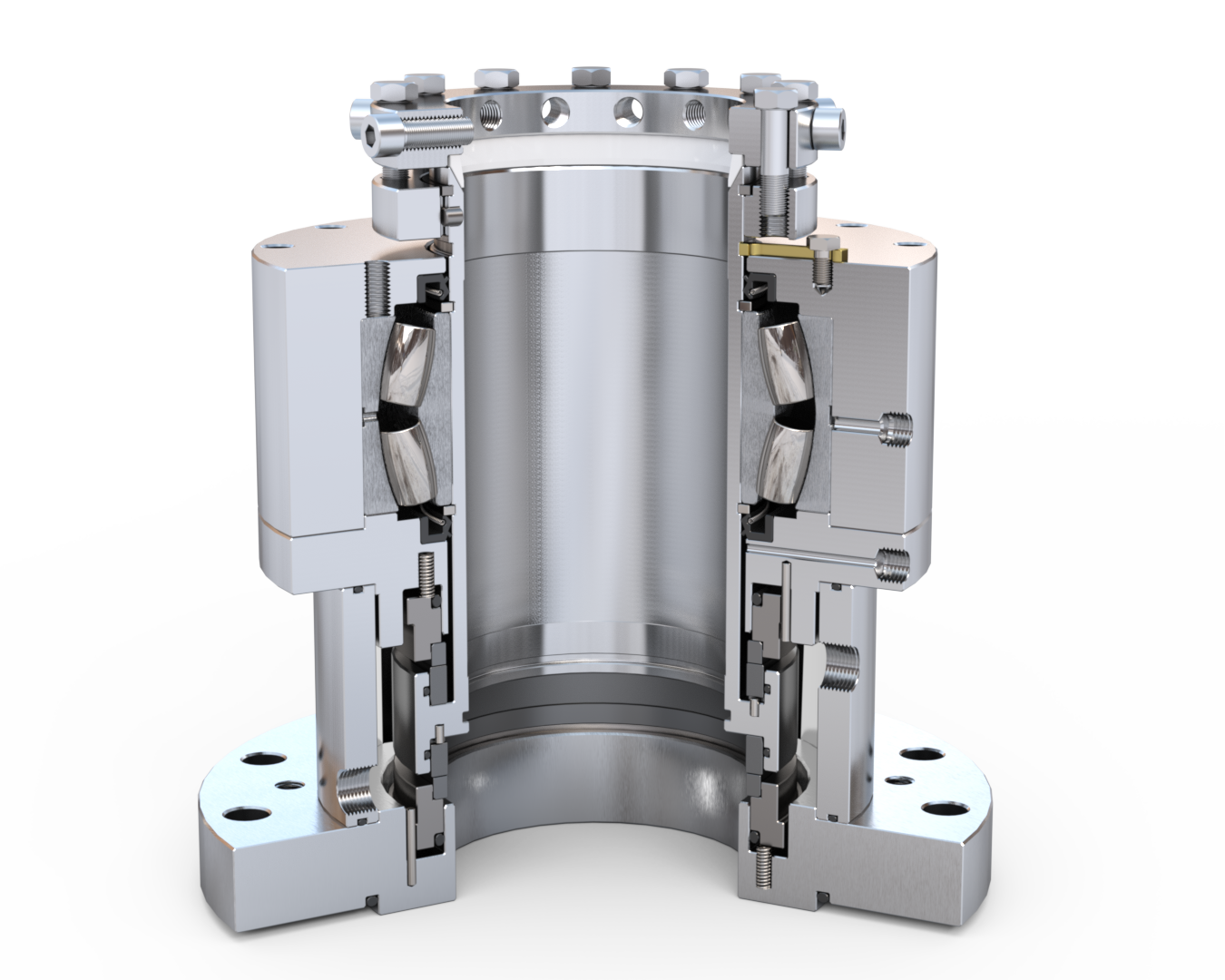
Mechanical seals operate with two precision faces running against each other under pressure. A thin fluid film lubricates and cools these faces. Temperature affects this system in several important ways:
- Changes the viscosity of the lubricating film
- Causes thermal expansion of components
- Affects the properties of elastomers (O-rings)
- Influences face material stability
- Can create thermal distortion of the seal faces
When temperature moves outside the design limits of the seal, performance drops quickly.
Effects of High Temperature on Mechanical Seals
High temperature is one of the most common thermal challenges.
Key problems caused by high temperature:
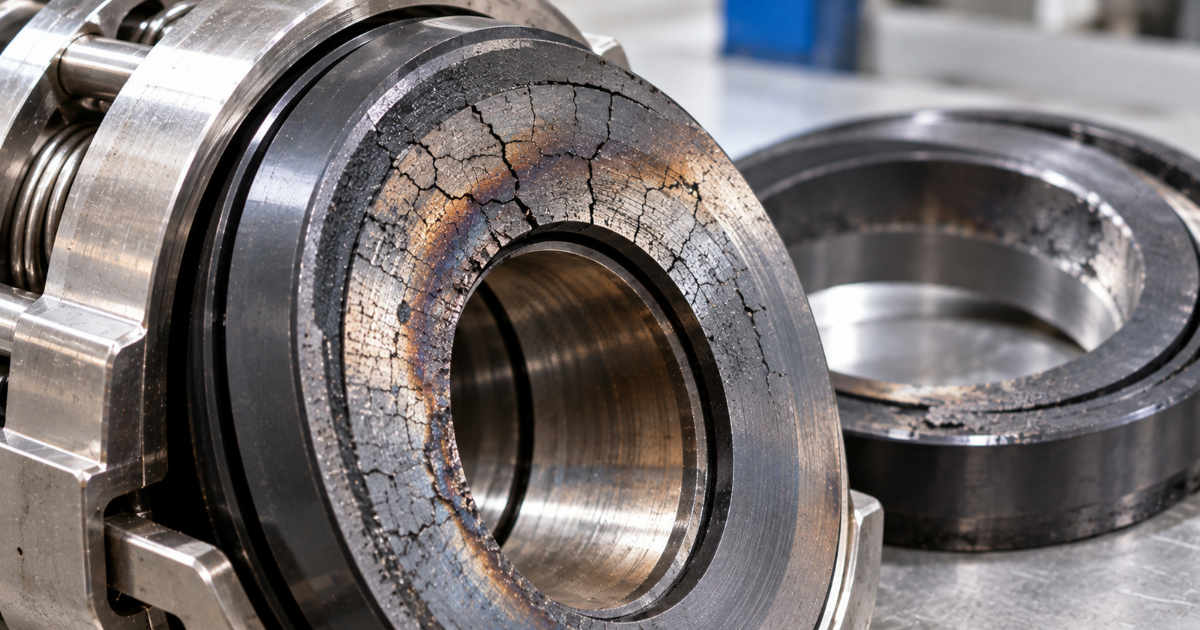
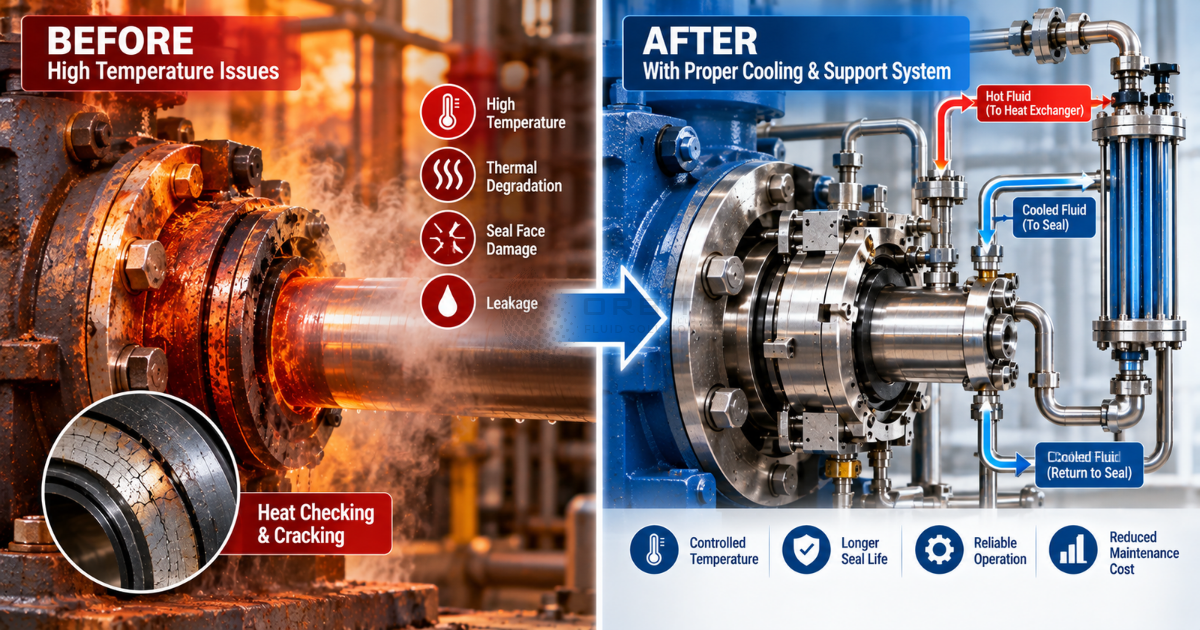
1. Thermal Cracking of Seal Faces (Heat Checking)
Rapid or excessive heating causes radial cracks on the seal faces, especially on hard materials. These cracks lead to leakage and rapid wear.
2. Reduced Fluid Film Lubrication
As temperature rises, fluid viscosity drops. The lubricating film becomes thinner and less effective, increasing the risk of face contact and wear.
3. Elastomer Degradation
O-rings and secondary seals can harden, crack, or lose elasticity when exposed to temperatures beyond their rating. This is a frequent cause of leakage.
4. Face Distortion
Uneven heating can cause the seal faces to lose flatness, creating leakage paths.
5. Increased Wear Rate
Higher temperatures accelerate wear of both faces and other components.
Effects of Low Temperature
Low temperatures also create challenges, although they are less commonly discussed:
- Elastomers can become stiff or brittle
- Reduced flexibility of secondary seals
- Possible loss of sealing ability during cold start-up
- Some fluids may become highly viscous or even solidify
Proper material selection is essential for low-temperature services.
Thermal Shock — A Hidden Danger
Thermal shock occurs when the seal experiences sudden and large temperature changes (for example, hot process fluid followed by cold flush or cleaning cycles).
This rapid change can:
- Crack seal faces
- Damage elastomers
- Cause temporary or permanent distortion
Processes that involve frequent CIP/SIP, steam-out, or large temperature swings need special attention.
How to Protect Mechanical Seals from Temperature Problems
1. Select the Right Face Materials
- Silicon Carbide offers excellent thermal conductivity and helps remove heat from the faces
- Avoid materials that are prone to thermal cracking in high-temperature services
2. Choose Temperature-Resistant Elastomers
- Standard materials may not be sufficient
- Use high-temperature grades of FKM, FFKM, or other specialty elastomers as required
3. Apply the Correct Seal Support System
- API Plan 21 — Cooled flush from discharge
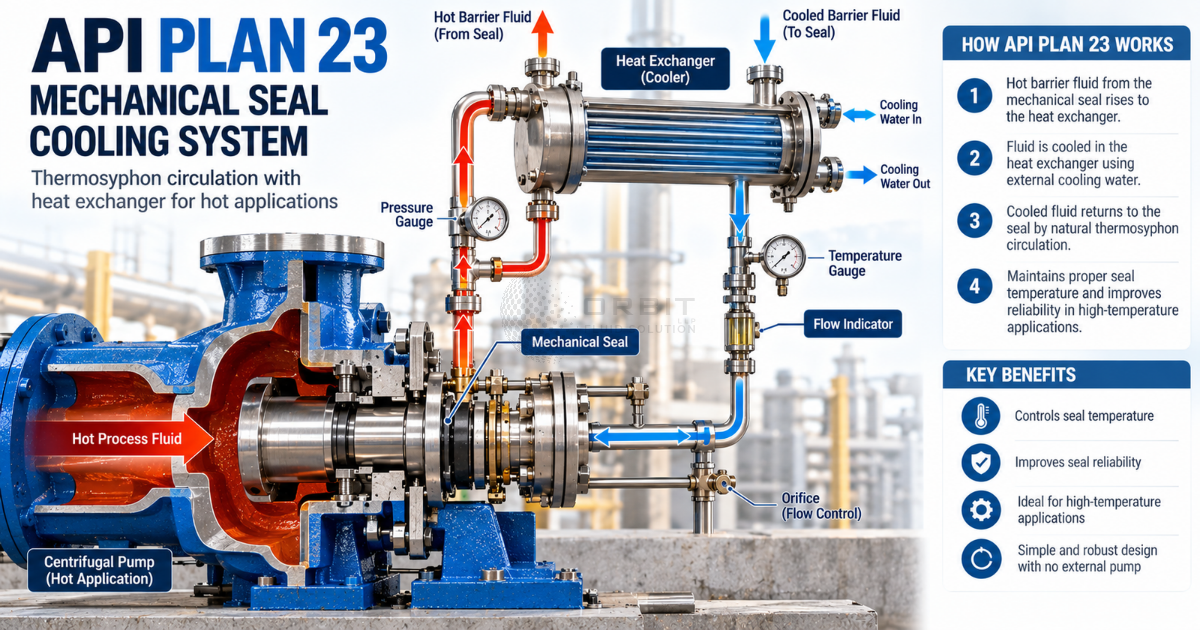
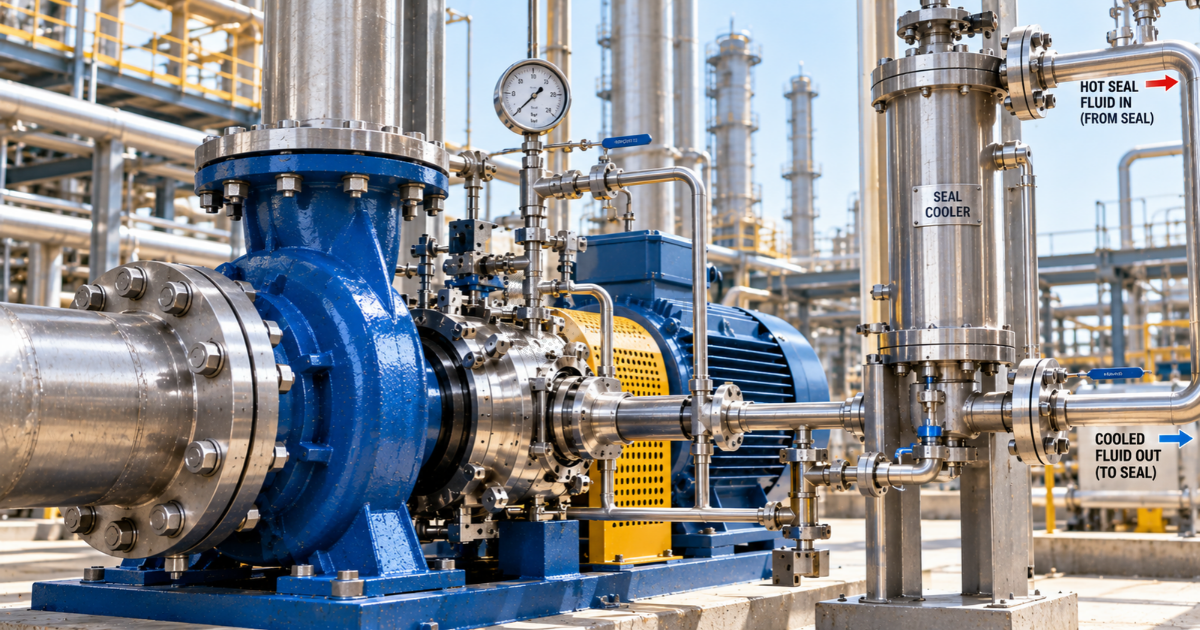
- API Plan 23 — Closed-loop cooling using a pumping ring (excellent for hot applications)
- External cooling jackets where appropriate
4. Use Balanced Seal Designs
Balanced seals reduce face loading and heat generation, which is especially valuable in high-temperature services.
5. Control Operating Procedures
- Avoid sudden temperature changes where possible
- Ensure proper warm-up and cool-down procedures
- Prevent dry running, which causes rapid temperature rise at the faces
Best Practices for Temperature Management
- Always measure actual seal chamber temperature, not just process temperature
- Select materials based on the highest temperature the seal will see (including cleaning cycles)
- Use effective cooling arrangements for hot services
- Monitor temperature trends as part of predictive maintenance
- Avoid thermal shock during start-up, shutdown, and cleaning
- Keep records of temperature-related failures for continuous improvement
Case Study: Solving High-Temperature Seal Failures
A chemical plant was experiencing repeated seal failures on a hot process pump. Seal life averaged only 3–4 months. Investigation revealed that the seal chamber temperature was significantly higher than expected and the original seal lacked adequate cooling.
Solution by Orbit Fluid Solution LLP:
- Upgraded to a balanced seal with high-temperature capable materials
- Implemented an effective Plan 23 cooling system
- Improved start-up procedures to reduce thermal shock
Results:
- Seal chamber temperature reduced to acceptable levels
- Seal life extended beyond 16 months
- Major reduction in unplanned downtime
How Orbit Fluid Solution LLP Helps with Temperature Challenges
At Orbit Fluid Solution LLP, we support plants in managing temperature-related sealing issues through:
- Application analysis including actual temperature conditions
- Selection of appropriate face and elastomer materials
- Recommendation of correct seal support and cooling plans
- Balanced and high-temperature seal designs
- Technical support for installation and operation
Our goal is to help you achieve reliable performance even in thermally demanding applications.
Control Temperature, Protect the Seal
Temperature affects mechanical seal performance more than many people realize. High temperatures can cause face cracking, elastomer failure, and rapid wear. Low temperatures and thermal shock create their own risks.
The good news is that most temperature-related problems are preventable. With the right materials, proper cooling arrangements, balanced designs, and disciplined operating practices, seals can perform reliably even in challenging thermal conditions.
At Orbit Fluid Solution LLP, we help industries understand and solve these thermal challenges.
Experiencing temperature-related seal failures in your plant? Contact our technical team today for expert analysis and practical solutions.
Also Read:
-
 Top 10 Causes of Mechanical Seal Leaks and How to Fix Them16 Apr 2025 Seal Failure and Prevention
-
 How to Prevent Seal Failures in Oil and Gas Applications: A Comprehensive Guide16 Apr 2025 Industry-Specific Seal Solutions
-
 The Ultimate Guide to Choosing Mechanical Seals for the Food Processing Industry05 Apr 2025 Industry-Specific Seal Solutions
-
How Temperature Affects Mechanical Seal Performance30 Oct 2026 Industry-Specific Seal Solutions
-
 How to Install Mechanical Seals Correctly (Step-by-Step Guide)13 Oct 2026 Industry-Specific Seal Solutions

