
Mechanical Seals vs Gland Packing: Which Is Better in 2026?
An Old Debate That Still Matters
For decades, plants have debated whether to use traditional gland packing or modern mechanical seals. Even in 2026, many facilities still operate pumps with packing, especially on older equipment or in applications where “it has always been done this way.”
A maintenance manager once told us: “We stuck with packing because it was familiar and seemed cheaper. After we calculated the real cost of water usage, product loss, sleeve wear, and constant adjustment, switching to mechanical seals became an obvious decision.”
At Orbit Fluid Solution LLP, we regularly help plants evaluate this choice. In this guide, we compare Mechanical Seals vs Gland Packing in practical terms so you can decide which is better for your operations in 2026.
What Is Gland Packing?
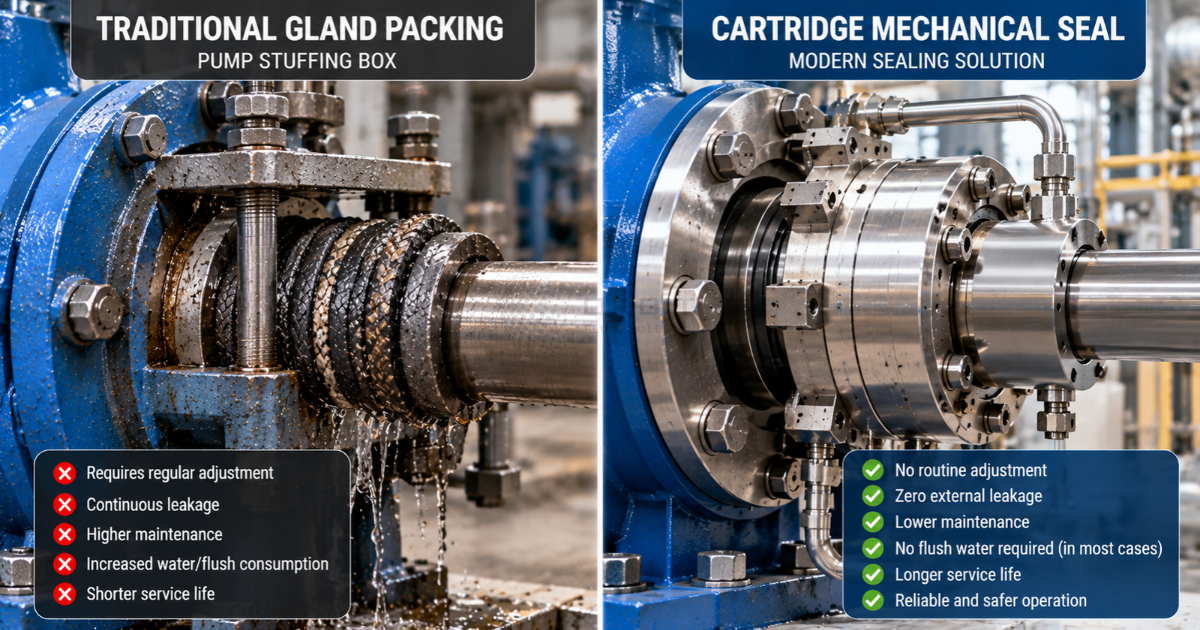
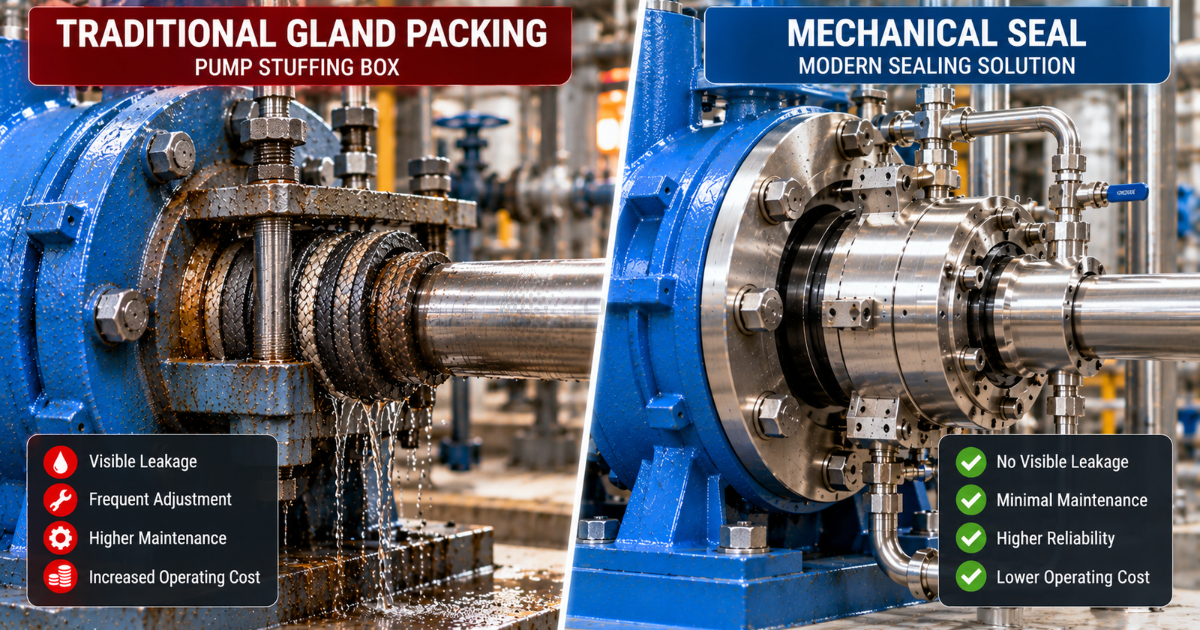
Gland packing (also called compression packing) consists of braided rings of material (often graphite, PTFE, or aramid-based) that are compressed around the shaft by a gland follower. The packing creates a seal by being squeezed against the shaft and the stuffing box wall.
Key characteristics:
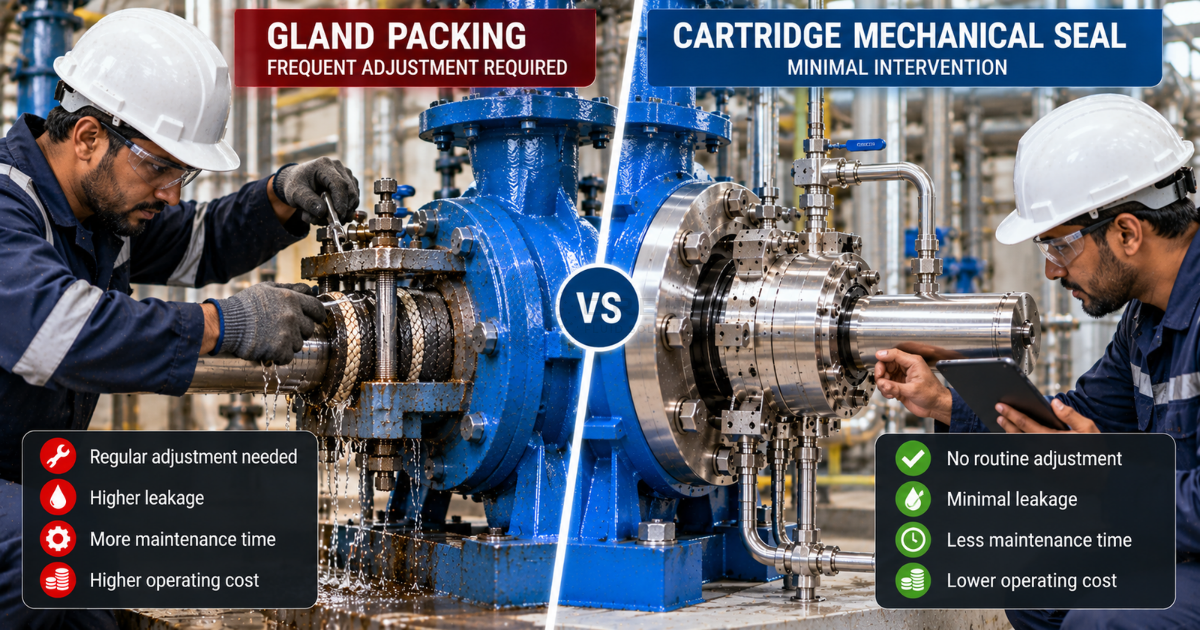
- Requires regular adjustment
- Needs a certain amount of leakage for lubrication and cooling
- Causes gradual shaft or sleeve wear
- Relatively simple and familiar technology
What Are Mechanical Seals?
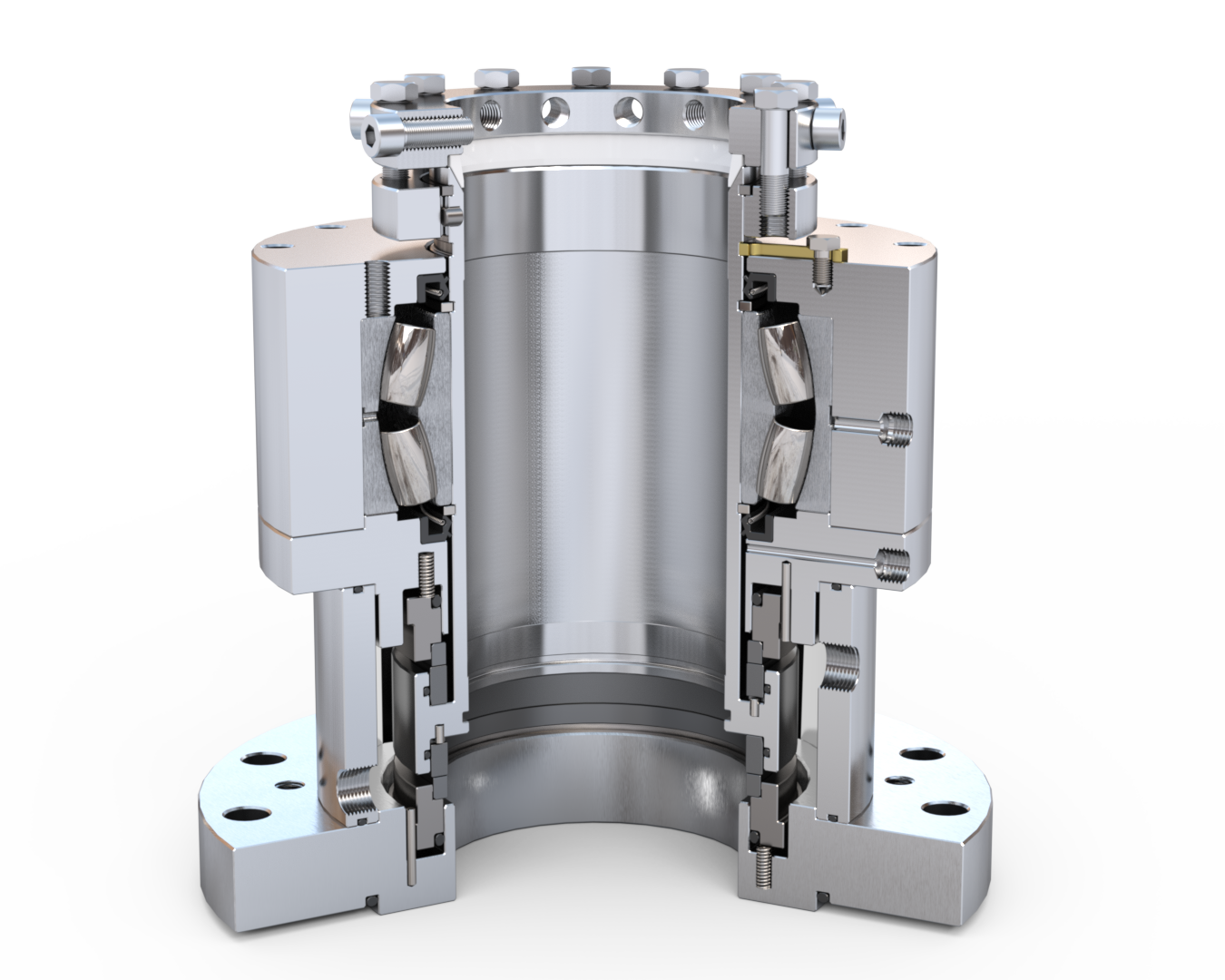
A mechanical seal uses two precision-lapped faces (one rotating, one stationary) that run against each other with a very thin fluid film. Springs and hydraulic forces keep the faces closed, creating a high-performance seal with minimal leakage.
Key characteristics:
- Very low leakage (often near zero)
- No need for continuous adjustment
- Higher initial cost but better long-term performance
- Available in single, double, and cartridge designs
Head-to-Head Comparison: Mechanical Seals vs Gland Packing
| Parameter | Gland Packing | Mechanical Seals |
|---|---|---|
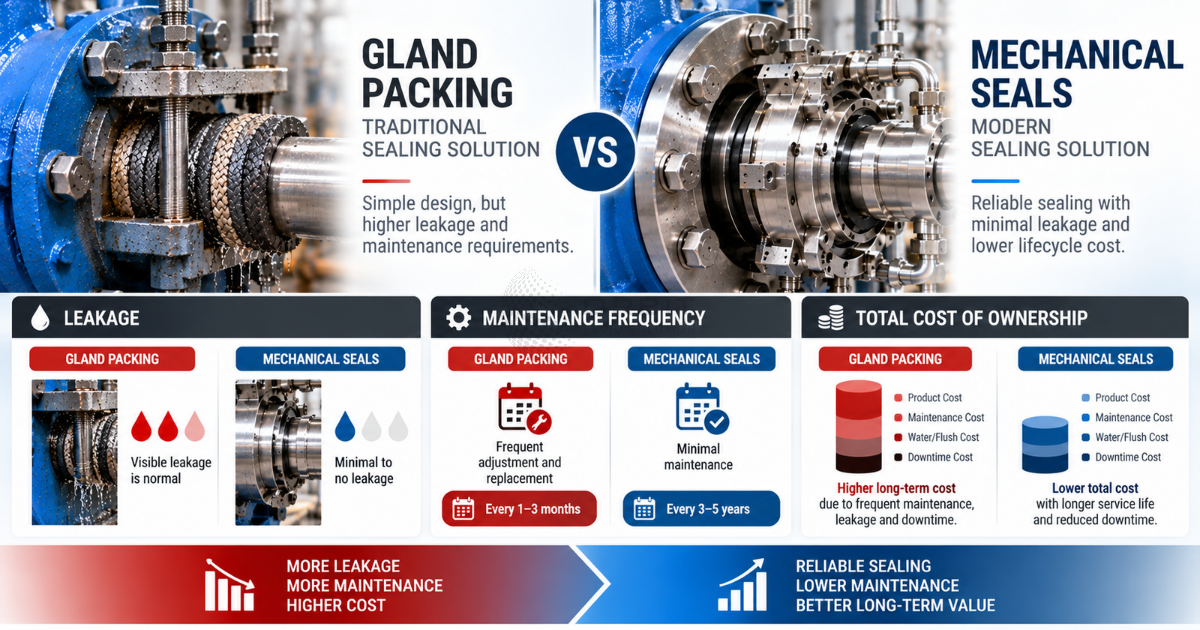
| Leakage | Continuous controlled leakage required | Very low to near-zero leakage |
| Maintenance | Frequent adjustment needed | Minimal adjustment after installation |
| Shaft/Sleeve Wear | Significant over time | Minimal |
| Energy Consumption | Higher (friction + leakage losses) | Lower |
| Reliability | Depends heavily on maintenance | Generally higher when correctly applied |
| Initial Cost | Lower | Higher |
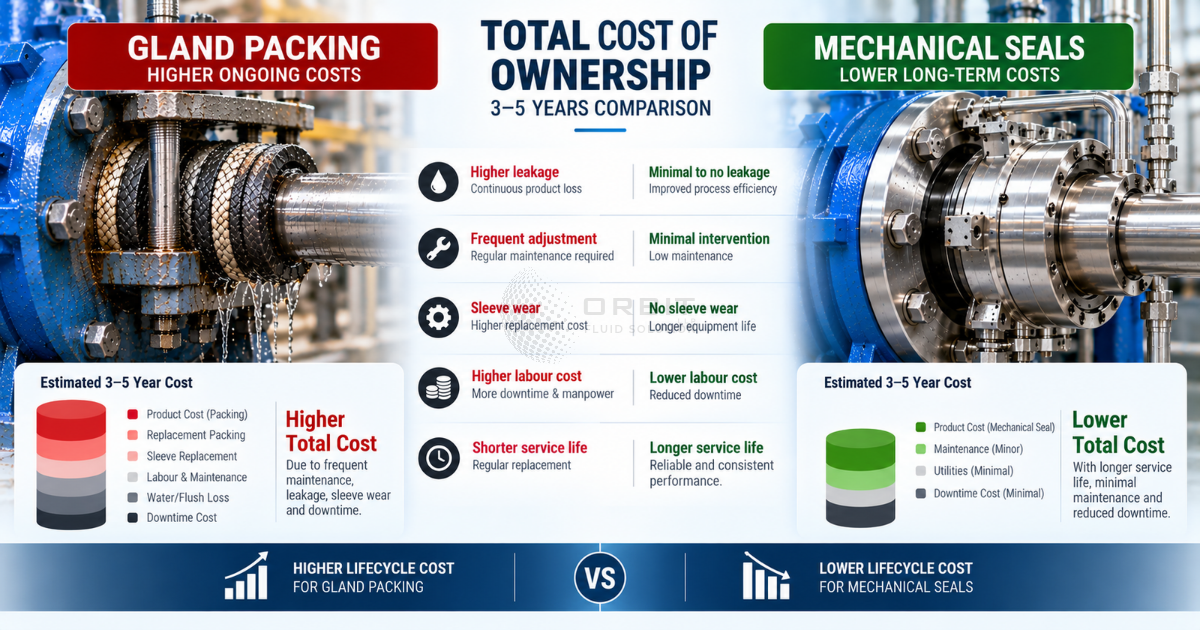
| Total Cost of Ownership | Often higher long-term | Usually lower over equipment life |
| Safety & Environmental Impact | Higher leakage risk | Much better containment |
| Suitability for Hazardous Fluids | Limited | Excellent (especially dual seals) |
| Skill Level Required | Regular adjustment skill needed | Correct installation is critical |
Advantages of Gland Packing
- Lower initial purchase cost
- Simple technology that many technicians understand
- Can sometimes tolerate more shaft misalignment or run-out
- Easier to install in some very old or non-standard equipment
- Can be adjusted while the pump is running (in many cases)
Packing can still be a reasonable choice for non-critical, clean, low-value fluid services where leakage is acceptable and maintenance labor is readily available.
Advantages of Mechanical Seals
- Dramatically reduced leakage
- Lower product loss and water consumption
- Reduced shaft and sleeve wear
- Less frequent maintenance interventions
- Better energy efficiency
- Superior performance with hazardous, toxic, or expensive fluids
- Improved safety and environmental compliance
- Longer mean time between failures when correctly selected and installed
In 2026, these advantages make mechanical seals the preferred choice for most industrial applications.
The Real Cost Difference in 2026
Many plants still focus on the purchase price of packing versus a mechanical seal. This view is incomplete.
Hidden costs of packing often include:
- Continuous product or water loss
- Frequent adjustment labor
- Premature shaft or sleeve replacement
- Higher energy consumption due to friction
- Environmental or housekeeping costs from leakage
- Unplanned downtime when packing fails
When these factors are added, mechanical seals usually deliver a lower total cost of ownership, especially on critical or continuous-duty pumps.
When Packing Might Still Make Sense
Gland packing can still be appropriate in certain situations:
- Non-critical pumps handling clean, low-value fluids
- Very old equipment where converting to a mechanical seal is impractical
- Applications with extreme shaft movement that is difficult for seals to handle
- Temporary or low-duty services where simplicity is prioritized
Even in these cases, it is worth periodically reviewing whether a modern seal solution would be better.
When Mechanical Seals Are Clearly Better
Mechanical seals are the better choice when:
- Leakage must be minimized or eliminated
- The fluid is hazardous, toxic, flammable, or expensive
- Environmental or safety regulations are strict
- Energy efficiency and reliability are priorities
- Maintenance resources are limited
- The pump is critical to production
In 2026, this covers the majority of industrial pumping applications.
Converting from Packing to Mechanical Seals
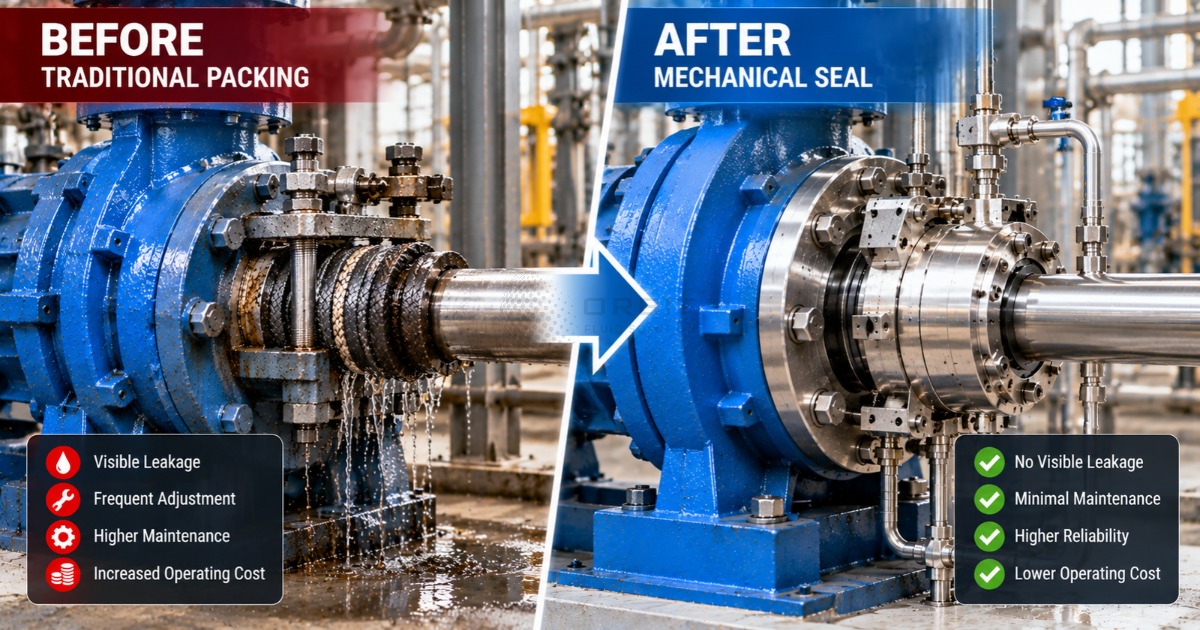
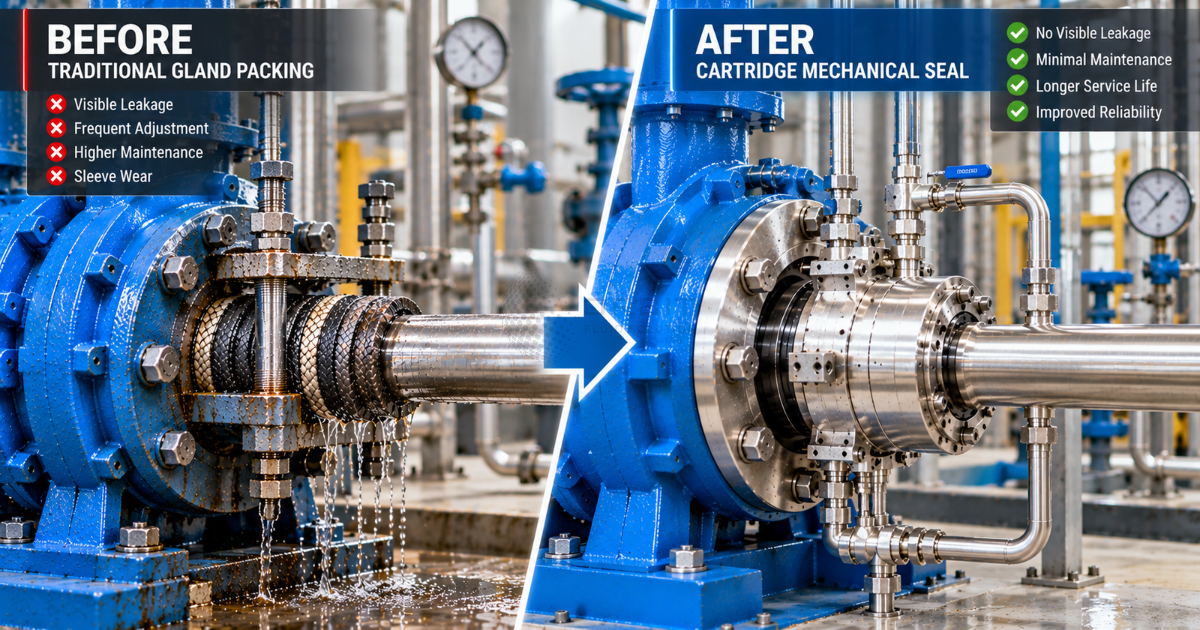
A process plant was using gland packing on several critical pumps. The plant faced ongoing issues with leakage, frequent adjustments, and sleeve wear.
Solution by Orbit Fluid Solution LLP:
- Evaluated the applications
- Converted the pumps to appropriate cartridge mechanical seals
- Provided installation support and basic training
Results:
- Leakage reduced to negligible levels
- Adjustment work almost eliminated
- Shaft sleeve wear stopped
- Overall maintenance effort and cost decreased significantly
- Reliability of the pumps improved
The conversion paid for itself through reduced product loss and lower maintenance within a relatively short period.
Best Practices When Switching from Packing to Mechanical Seals
- Assess the actual operating conditions carefully
- Choose the correct seal type (single, double, or cartridge)
- Check shaft condition and repair if necessary
- Ensure proper seal chamber design or use suitable adapters
- Follow correct installation procedures
- Train the team on the differences in operation and maintenance
- Monitor performance after conversion
How Orbit Fluid Solution LLP Helps Plants Make the Transition
At Orbit Fluid Solution LLP, we support plants that are still using gland packing and want to evaluate or implement mechanical seals. Our services include:
- Application review and cost-benefit analysis
- Selection of the right mechanical seal solution
- Cartridge seal options for easier installation
- Guidance on conversion from packing
- Installation support and training
We help you make the decision based on real performance and total cost, not just tradition.
Mechanical Seals Are the Better Choice for Most Plants in 2026
The comparison of Mechanical Seals vs Gland Packing is no longer close for the majority of industrial applications. While packing still has a place in some limited situations, mechanical seals offer clear advantages in leakage control, reliability, maintenance effort, energy efficiency, safety, and long-term cost.
In 2026, plants that continue to rely on packing for critical or continuous-duty services are often accepting higher total costs and unnecessary risks.
At Orbit Fluid Solution LLP, we help industries make the transition to modern sealing solutions with confidence.
Still using gland packing on important pumps? Contact our technical team today for a practical evaluation and recommendations tailored to your plant.
Also Read:
-
 Top 10 Causes of Mechanical Seal Leaks and How to Fix Them16 Apr 2025 Seal Failure and Prevention
-
 How to Prevent Seal Failures in Oil and Gas Applications: A Comprehensive Guide16 Apr 2025 Industry-Specific Seal Solutions
-
 The Ultimate Guide to Choosing Mechanical Seals for the Food Processing Industry05 Apr 2025 Industry-Specific Seal Solutions
-
 How Temperature Affects Mechanical Seal Performance30 Oct 2026 Industry-Specific Seal Solutions
-
 How to Install Mechanical Seals Correctly (Step-by-Step Guide)13 Oct 2026 Industry-Specific Seal Solutions

